
Simple Steps to Find the Problem and Decide What to Do Next
If your dryer is not heating, takes too long to dry, makes odd sounds, or will not start, you can often find the problem with a few safe checks at home. Start with the power, lint screen, vent, door switch, and dryer settings. Many common dryer problems come from airflow trouble or a small part that is not working right. If the problem does not stop after basic checks, professional dryer repair is the safer next step.
What You Need Before Starting
Before you check your dryer, gather a few simple items and think about safety first. A dryer has heat, moving parts, and electrical parts, so do not rush. Unplug the machine when checking anything beyond the outside areas.
- a flashlight
- a vacuum with a hose attachment
- a soft brush or old toothbrush
- a screwdriver
- work gloves
- your dryer’s user manual, if you still have it
- basic appliance knowledge
It also helps to know the exact problem. Is the dryer running but not heating? Is it not turning on at all? Is it leaving clothes damp after a full cycle? A clear symptom makes troubleshooting easier.
Step-by-Step Checks You Can Do at Home
Start with the easy checks first. Many dryer issues have simple causes. Follow these steps in order so you do not miss anything.
- check the power source. If the dryer will not start, make sure it is plugged in. Then check your breaker box. A tripped breaker can stop the dryer or keep it from heating.
- look at the dryer settings. Some cycles use low heat or air only. Make sure the setting matches the load you are drying.
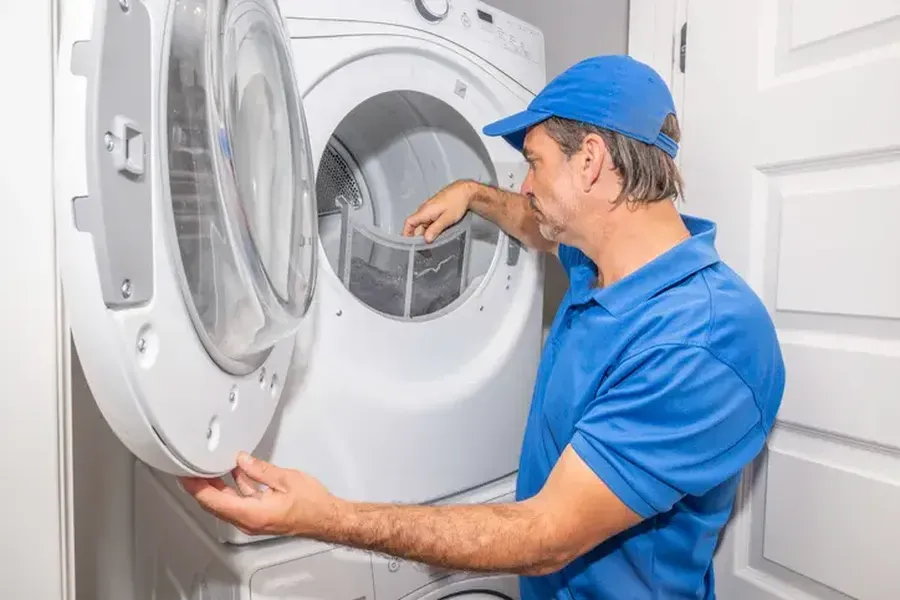
- clean the lint screen. A full lint screen blocks airflow and slows drying. Remove lint every load.
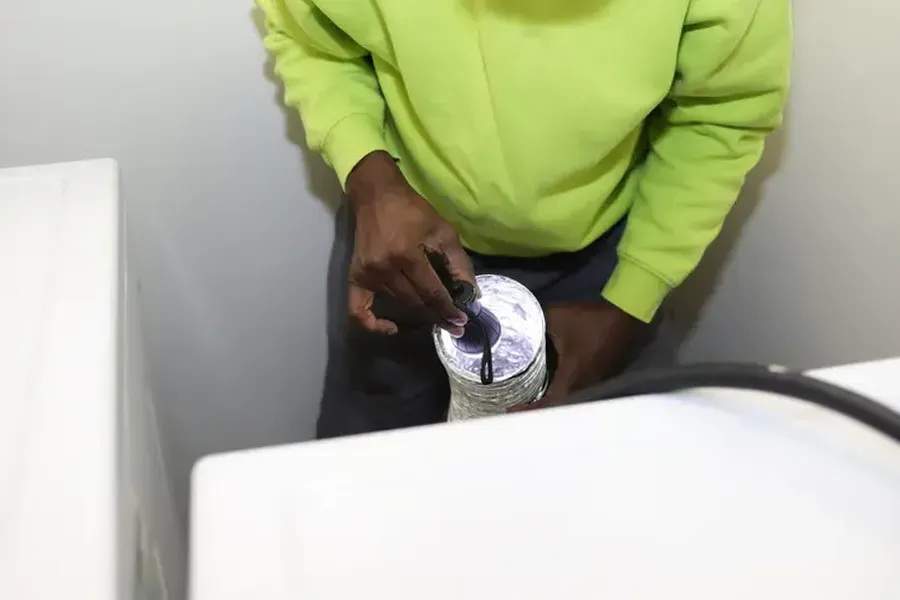
- inspect the vent hose. Pull the dryer out gently and look for a crushed or bent vent hose. Air cannot move well through a blocked hose.
- check the outside vent cap. Go outside and see if air is blowing out while the dryer runs. If not, lint may be stuck in the vent line.
- test the door switch. If the dryer door does not close well, the dryer may not start. A loose or broken switch can stop the cycle.
- listen for sounds. Thumping, squealing, or scraping can point to worn rollers, a belt issue, or loose items inside the drum.
- watch the drum. If the dryer turns on but the drum does not spin, the belt may be broken or off track.
A common example is a dryer that gets warm but clothes still stay wet. In many homes, the cause is not the heater. It is often a clogged vent line. Hot air needs a clear path to leave the dryer. If that path is blocked, moisture stays trapped with the clothes.
Common Mistakes to Avoid
It is easy to make a small problem worse. A careful approach helps protect both you and the appliance.
- do not keep running the dryer if you smell burning
- do not poke sharp tools into the vent or internal parts
- do not ignore long dry times, since blocked airflow can become a fire risk
- do not overload the drum, since packed clothes do not dry well
- do not open major panels unless you know how to put them back safely
- do not assume every no-heat problem means the heating element is bad
Another mistake is replacing parts too soon. People sometimes buy a new thermostat or heating element before checking the vent. That can waste time and money if the real problem is lint buildup.
When a Home Fix May Be Enough
Some dryer problems are simple and safe to handle at home. Cleaning the lint screen, clearing the outside vent opening, adjusting settings, or resetting a breaker are all reasonable first steps. Straightening a crushed vent hose may also help right away.
If the dryer starts working better after these checks, keep an eye on it for the next few loads. If drying times improve and the machine sounds normal, you may have solved the problem. Still, regular vent cleaning matters if you want to avoid another issue soon.
When to Call a Professional
Some problems need trained dryer repair service. Call a professional if the dryer has no heat after airflow checks, shuts off too soon, smells like something is burning, will not spin, or makes loud metal sounds. These signs can point to wiring trouble, a bad motor, worn drum parts, or failed internal sensors.
Professional appliance service also makes sense if your dryer is gas powered. Gas dryers have added safety risks, and gas line or burner problems should not be handled as a casual home project. If you have already tried the simple steps and the problem keeps coming back, a proper dryer repair visit can save time and lower the chance of bigger damage.
Get Help If the Problem Keeps Coming Back
If you’re in Oakland, CA and your dryer still is not working right, call (510) 493-5085 for help. I work hard to find the real cause and offer honest dryer repair through Sam's Appliance Care and Repair.